Interactive Diagram
Wood Pellet Line Diagram
Click any hotspot to learn more about that machine or component
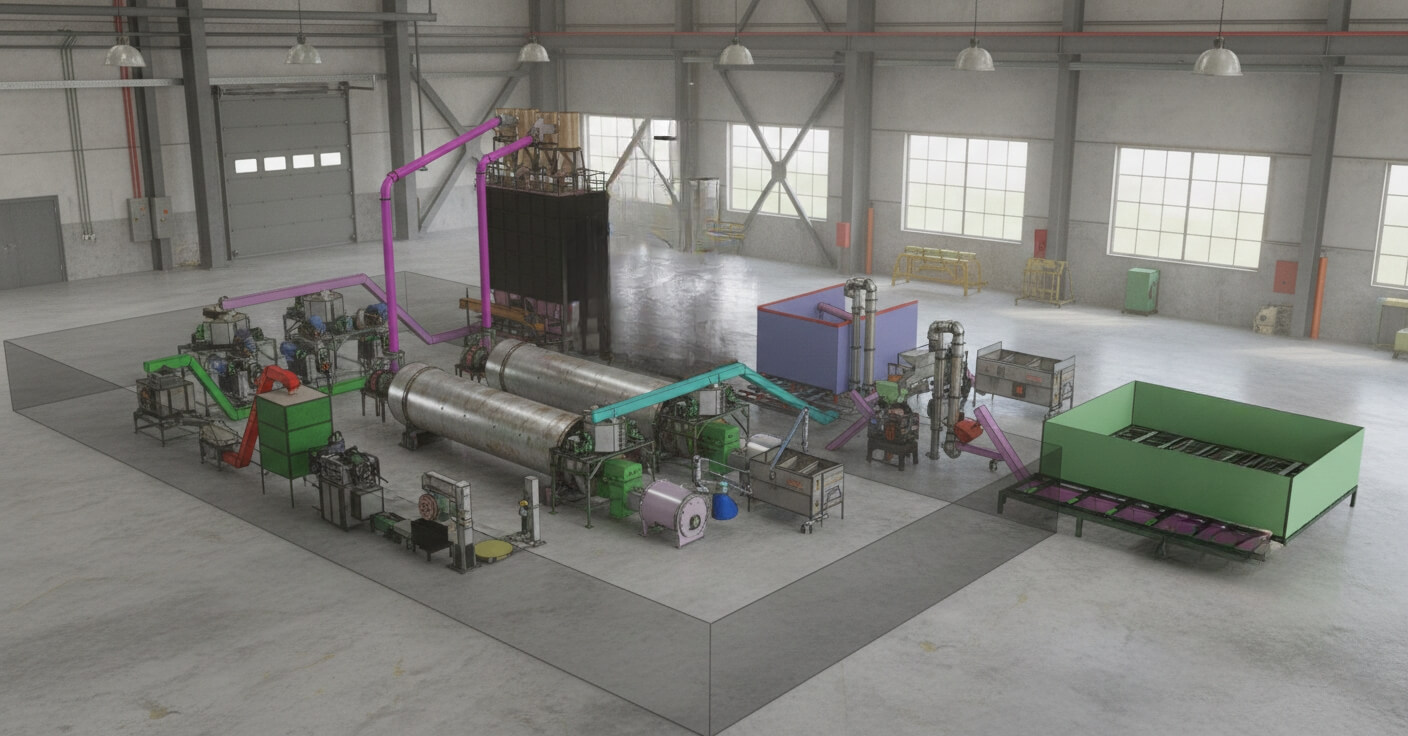
Teal dots = standard components · Gold dots = key line machines
A fully automated wood pellet production line — from sawdust drying and dosing to pelleting, cooling, sieving and automatic bagging with palletising. All machines are integrated into a single continuous production flow.
Click any hotspot to learn more about that machine or component
Teal dots = standard components · Gold dots = key line machines
The Wood Pellet Production Line consists of 13 interconnected units — from the dryer to the packaging and palletising system.
A rotary drum with lifters dries sawdust and fine wood fraction to optimal pelleting moisture (≤12%). A transport fan directs airflow through the drum.
A pneumatic conveying system that transfers dried sawdust from the dryer drum to the next stage — a feed hopper or directly to the dosing chain conveyor.
A dosing chain conveyor delivers dried sawdust to the hopper above the pellet press in a controlled manner. Regulated chain speed ensures continuous and even feed supply.
A raw material receiving hopper mounted directly above the pellet mill. An integrated mixer homogenises the sawdust and conditions it with steam before entering the die — a critical stage for pellet quality.
A 650 mm ring die with radial rollers presses conditioned sawdust into Ø6 or Ø8 mm pellets. Continuous operation, high capacity and long die life.
Hot pellets (80–90°C) from the pellet mill are transferred by chain conveyor to the cooler. An enclosed design prevents spillage and protects against dust in the facility.
A Counterflow Cooler with stainless steel 19×19 grids cools pellets with ambient air from 80–90°C to ≤25°C above room temperature. Capacity 8 t/h, automatic discharge.
Cooled pellets are transferred by chain conveyor to the vibro sieve feed hopper. Controlled flow prevents mechanical damage to the pellets after cooling.
The first vibro sieve separates fines (sawdust and crumbs) from finished pellets. The reject fraction is used as fuel for the dryer furnace — a closed energy cycle with zero waste.
A second vibro sieve performs final screening — removing sawdust and off-spec pellets that are returned to the dryer furnace. Only pellets meeting the standard remain at the outlet.
A semi-automatic bagging machine fills bags (15–25 kg) and immediately passes them to the palletising and stretch-wrapping system. A compact solution for lower packaging capacities.
A twin-head automatic bagging machine for simultaneous filling of two bags — double the productivity of a single-head version. Precise weighing, automatic sealing and bag labelling.
A robotic or automatic palletiser stacks filled bags onto a pallet in a programmed pattern. An automatic stretch wrapper wraps the pallet — finished product ready for transport and warehousing.
Each machine in the line is selected and sized for optimal flow and capacity of the entire pelleting process.
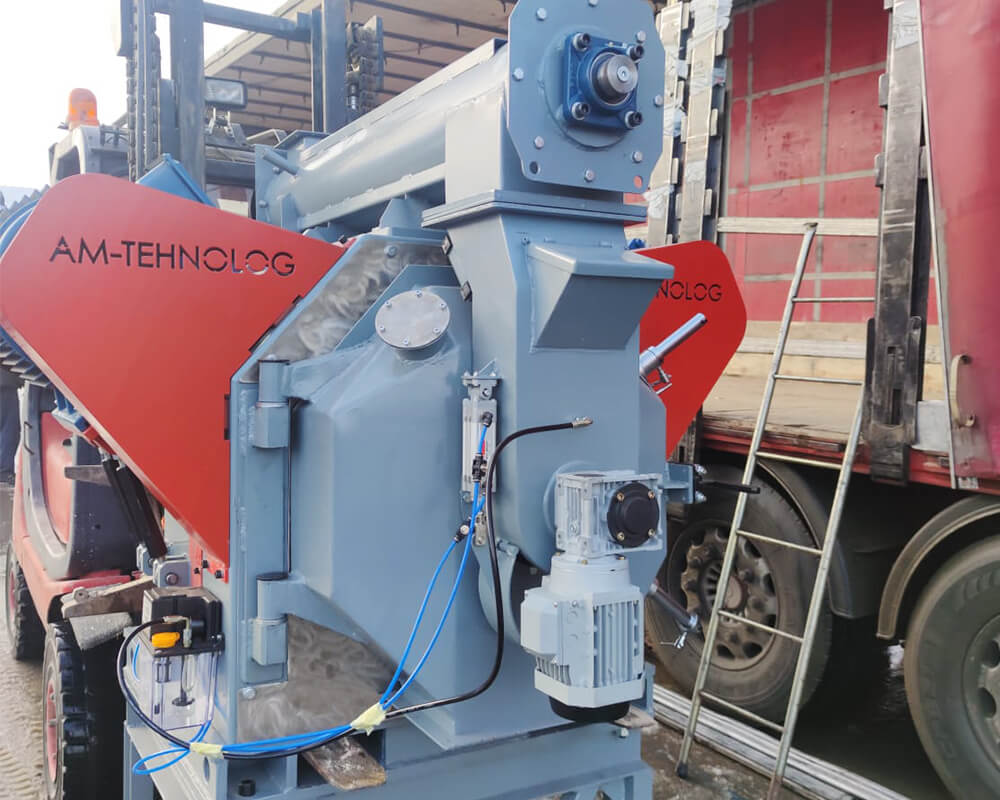 Pellet Mill AMP-650
Ring-die pellet mill with a 650 mm die designed for continuous production of high-quality wood pellets. Radial rollers evenly distribute pressure around the die circumference, ensuring uniform pellet density and extended die life. Electric motor drive with frequency drive enables fine capacity adjustment according to raw material moisture and type.
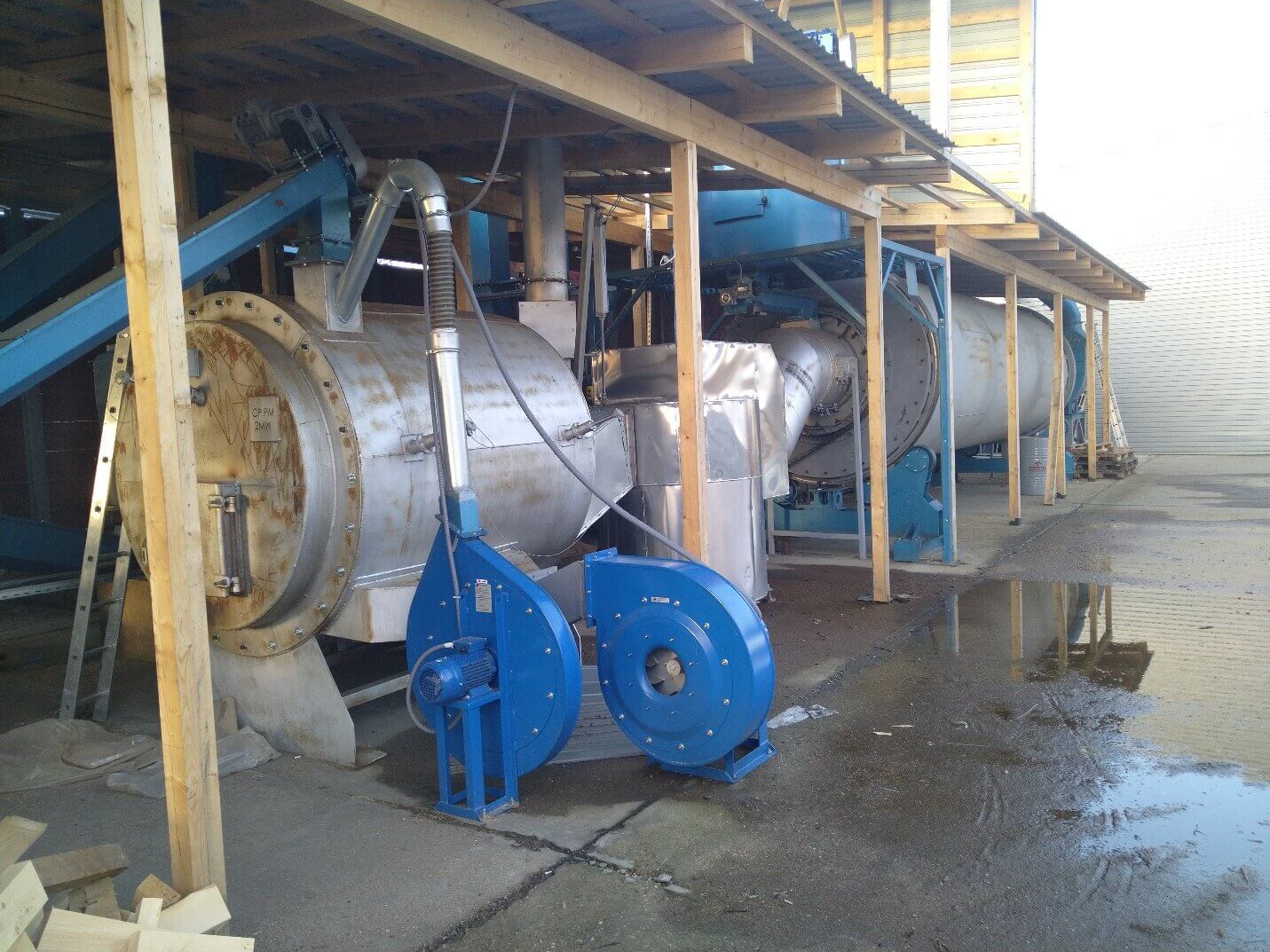 Dryer Drum Ø2400×10500
Rotary drum dryer with internal lifting flights for processing sawdust and fine wood fractions. Lifting flights raise the material and spread it across the drum cross-section, ensuring intensive heat exchange with combustion gases. Direct or indirect heating with combustion gases from sawdust and reject pellet furnace.
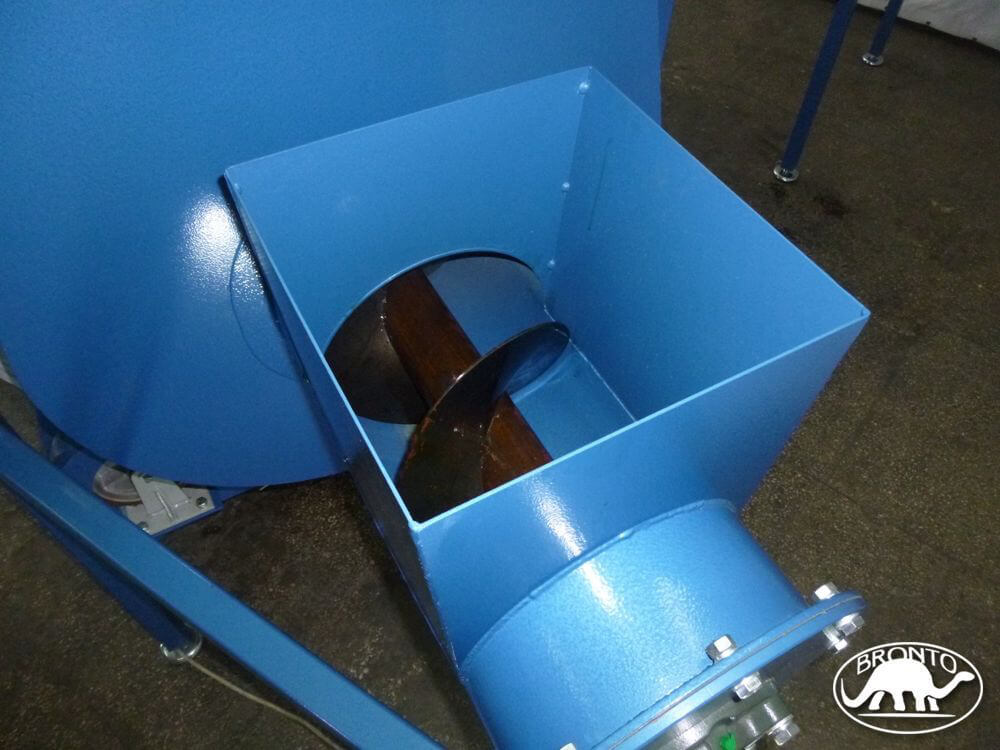 Cooler 19×19 (stainless)
Counterflow Cooler with 19×19 dm square cross-section made of stainless steel for optimal hygiene and durability. Pellets enter from above and fall gravitationally fall through a stream of ambient air coming from below — the counterflow principle. Automatic discharge system doses the cooled pellets uniformly without accumulation.
Bagger
The twin-head automatic bagging machine enables simultaneous filling of two bags, practically doubling packaging capacity compared to single-head solutions. The system automatically takes empty bags from storage, places them on the filling head, performs precise weighing, automatically seals and passes bags to the palletising conveyor. High weighing repeatability minimises material losses.
Every auxiliary machine is a critical link in the chain — without one, the entire flow stops.
Controlled dosing of dried sawdust from the feed silo into the mixing hopper above the pellet mill. Regulated chain speed = regulated pelleting capacity.
The mixer homogenises sawdust and adds steam/water before entry into the press. Ensures uniformly conditioned raw material — the key to firm and consistent pellets.
Transfers hot pellets (80–90°C) from the pellet mill outlet directly to the cooler. Enclosed chain construction prevents dust loss in the facility.
The centrifugal fan provides the required airflow velocity through the dryer drum. The airstream transfers heat and evaporates moisture from sawdust in a continuous cycle.
Transfers cooled pellets from the cooler to the vibro sieve feed hopper. Low chain speed protects pellet structure from mechanical damage after cooling.
Separates the fine fraction (dust and crumbles) from finished pellets. The separated fraction is pneumatically returned to the dryer furnace — zero waste in the process.
Final sieving separates sawdust and non-standard pellets that return to the dryer furnace firebox. Only pellets meeting the specified dimensional standards exit this sieve.
Compact semi-automatic line — the bagger fills bags, the automatic palletiser stacks them on a pallet and the stretch wrapper wraps the finished pallet for transport. Ideal for smaller facilities.
Automatic or robotic palletiser stacks bags in a predefined pattern on a EUR pallet. The automatic stretch wrapping machine then applies 4–6 stretch film layers — a stable pallet ready for warehouse and transport.
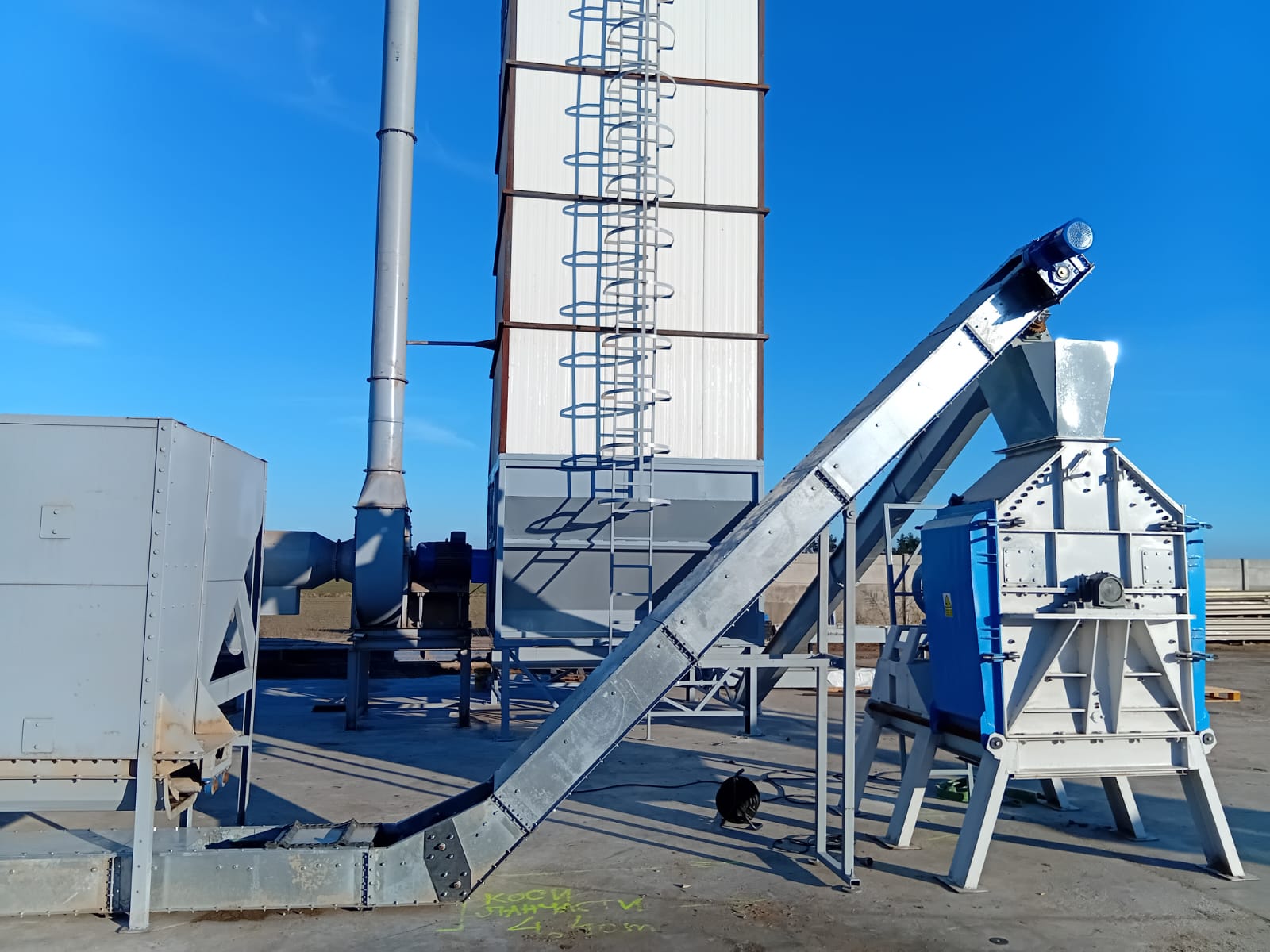
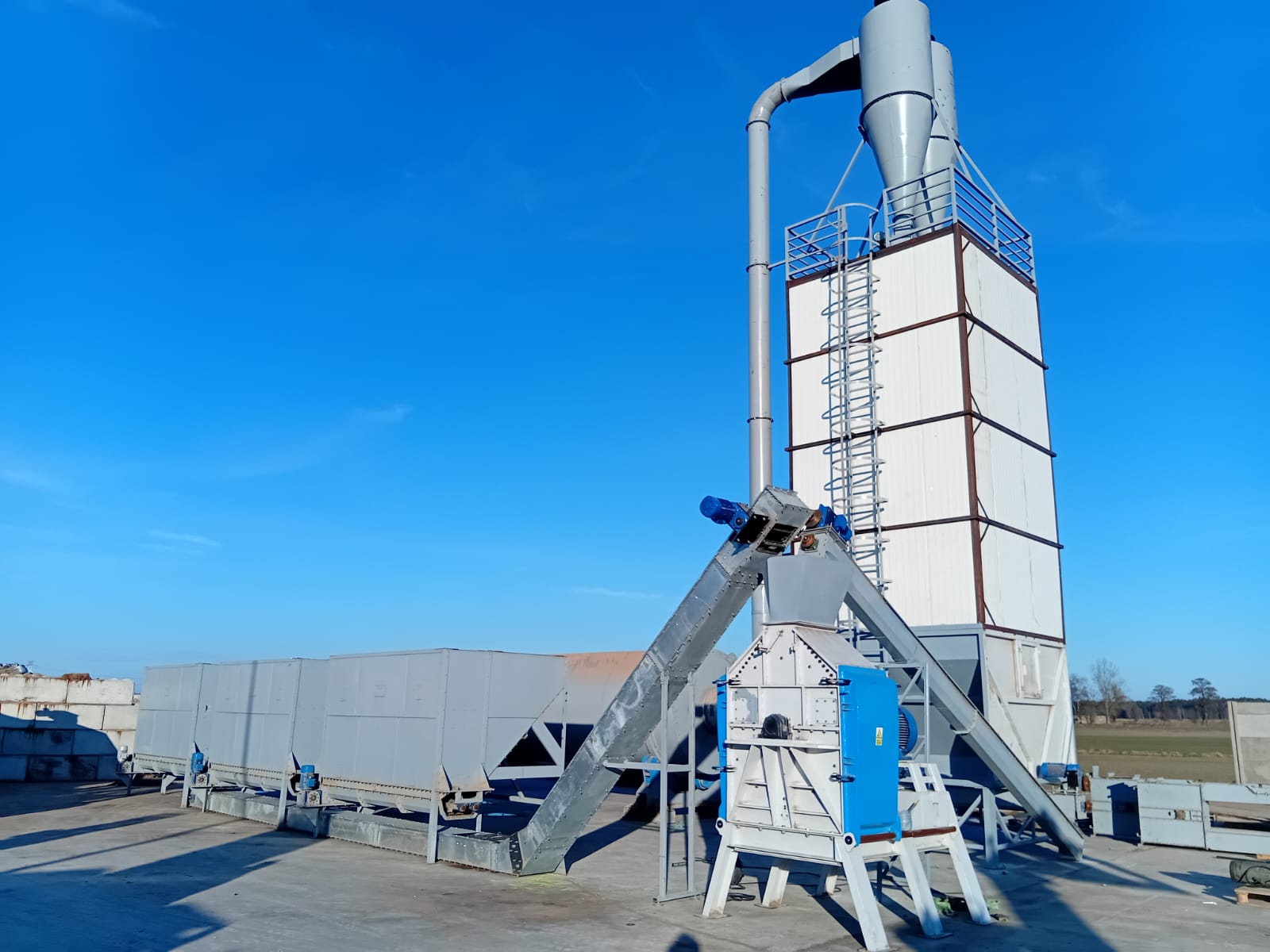
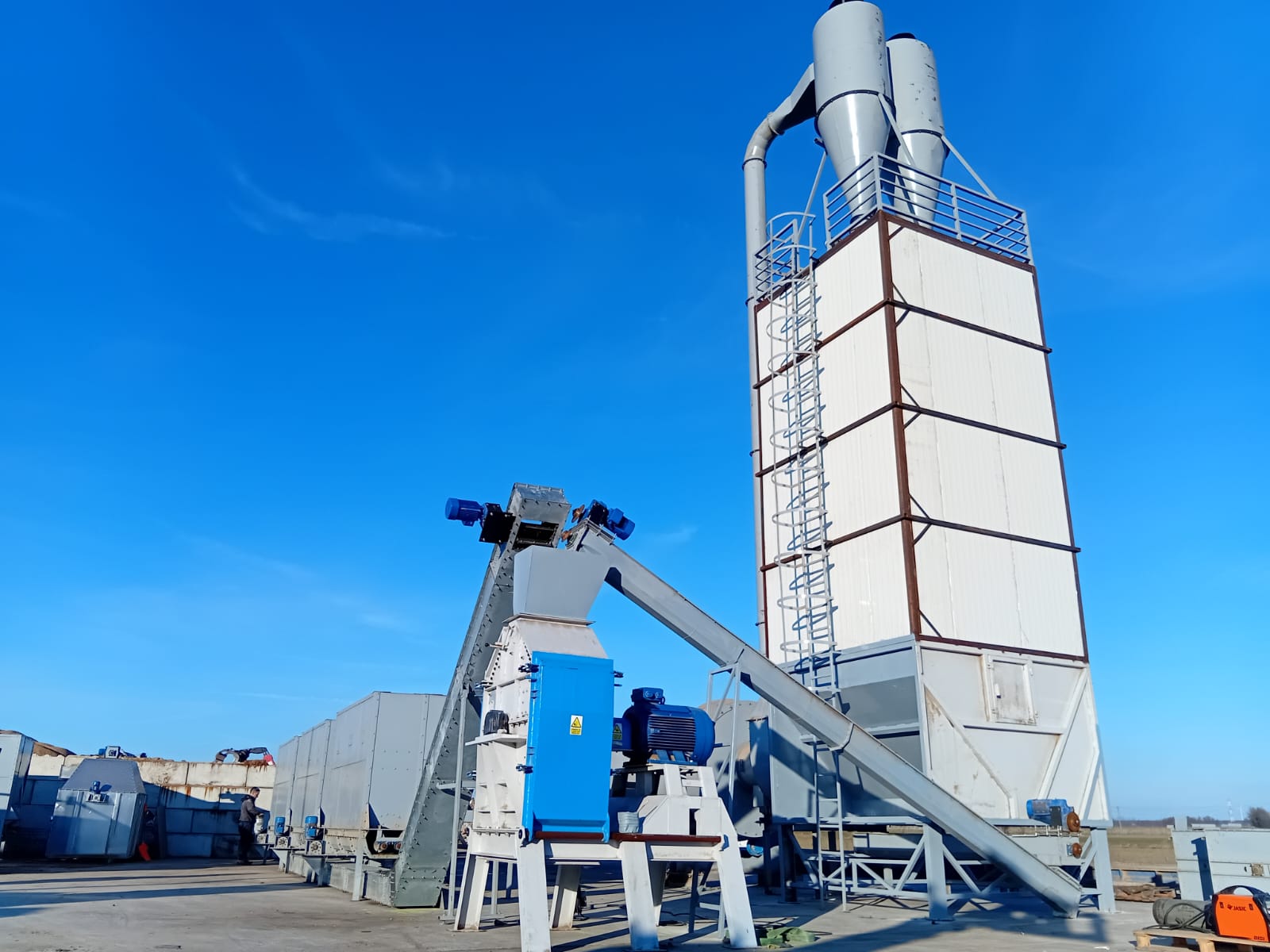
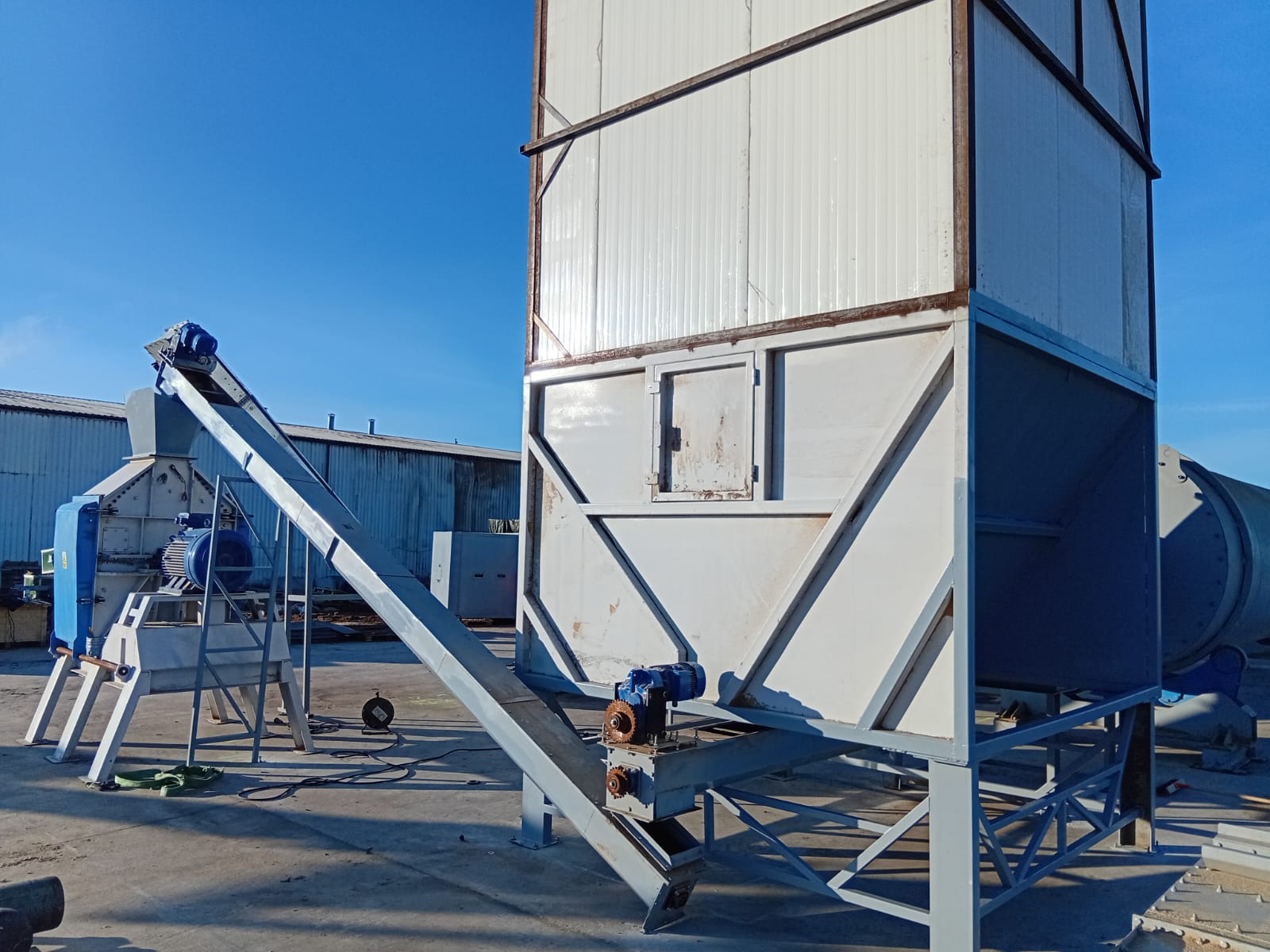
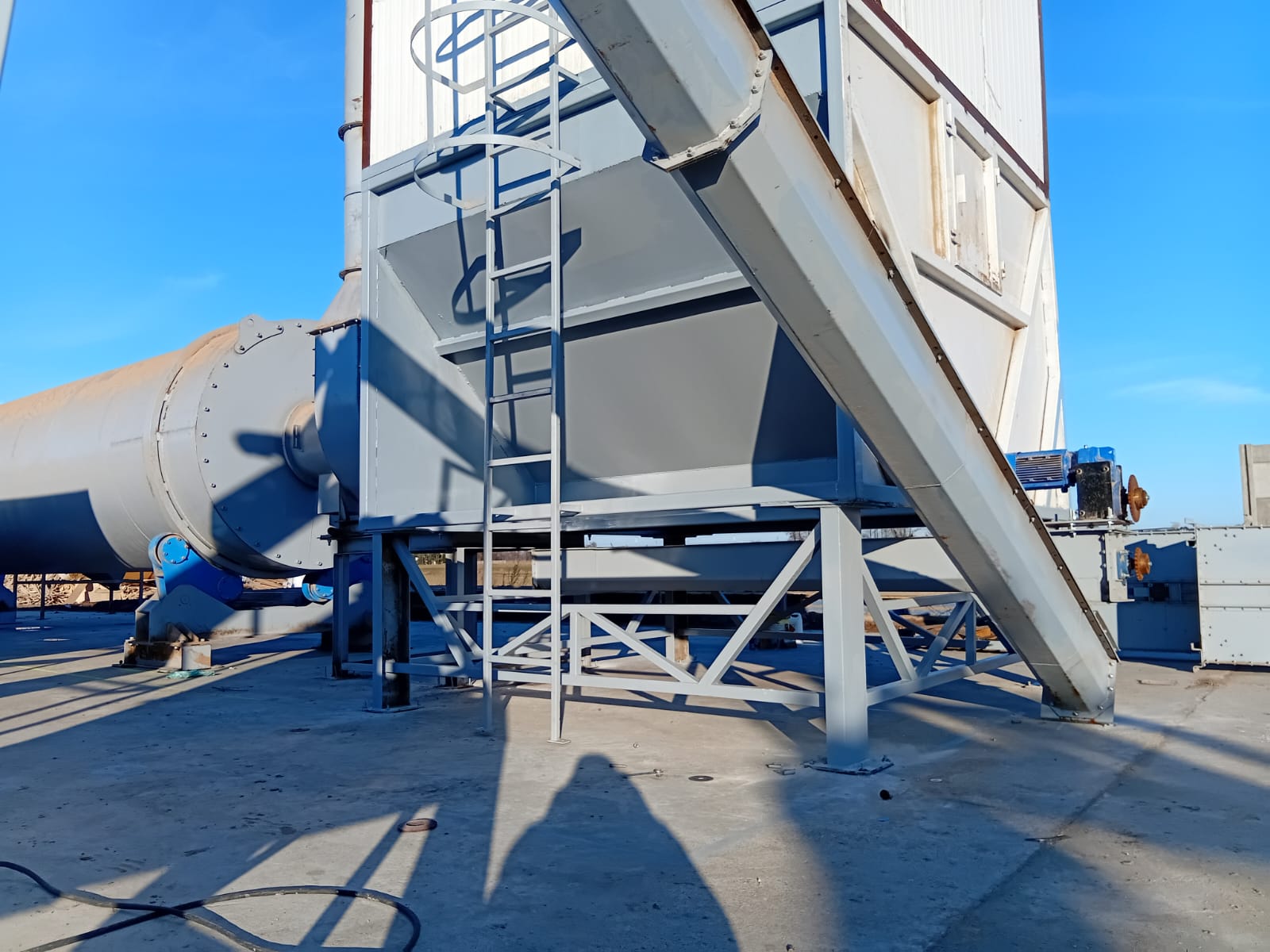
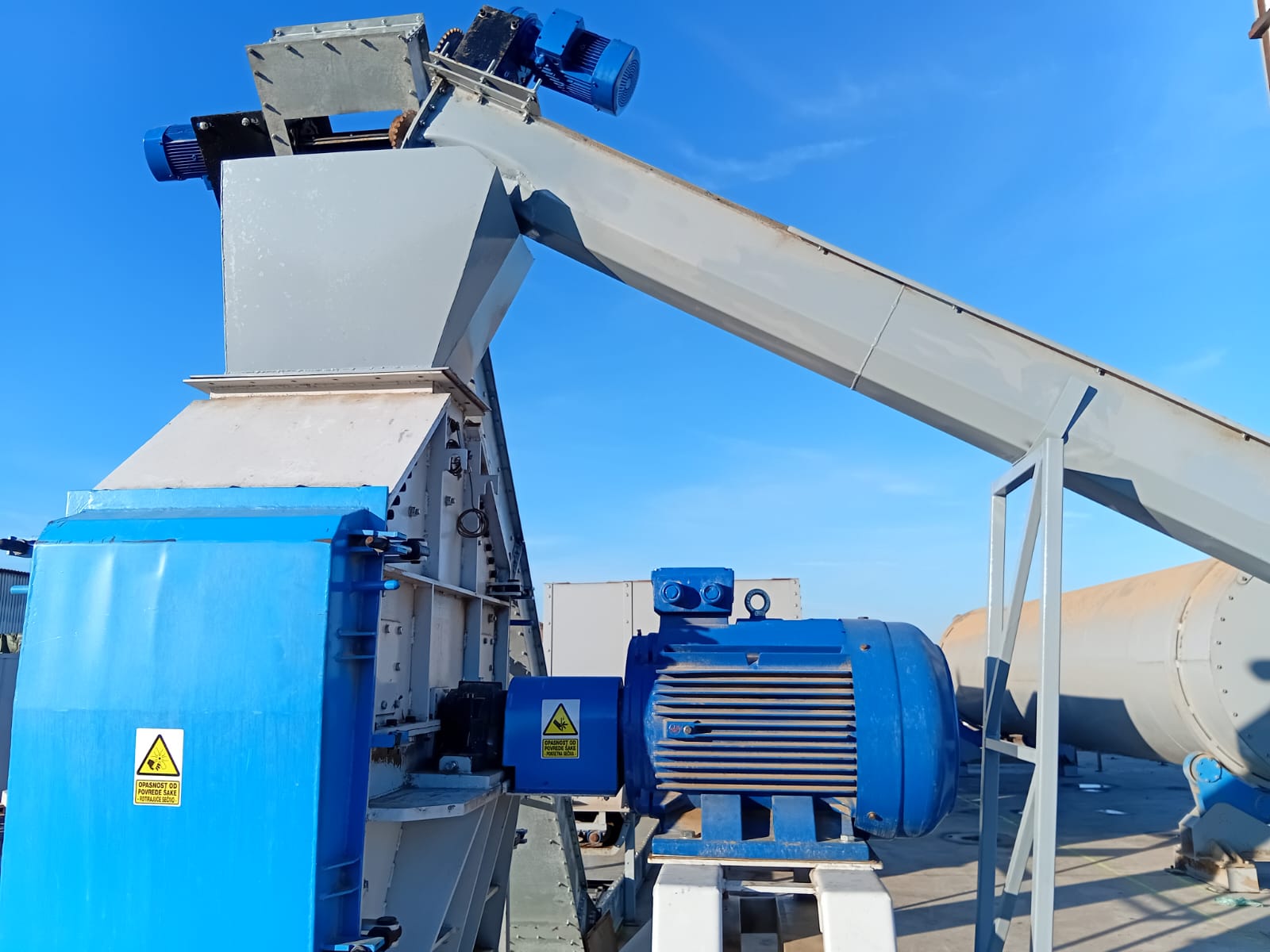
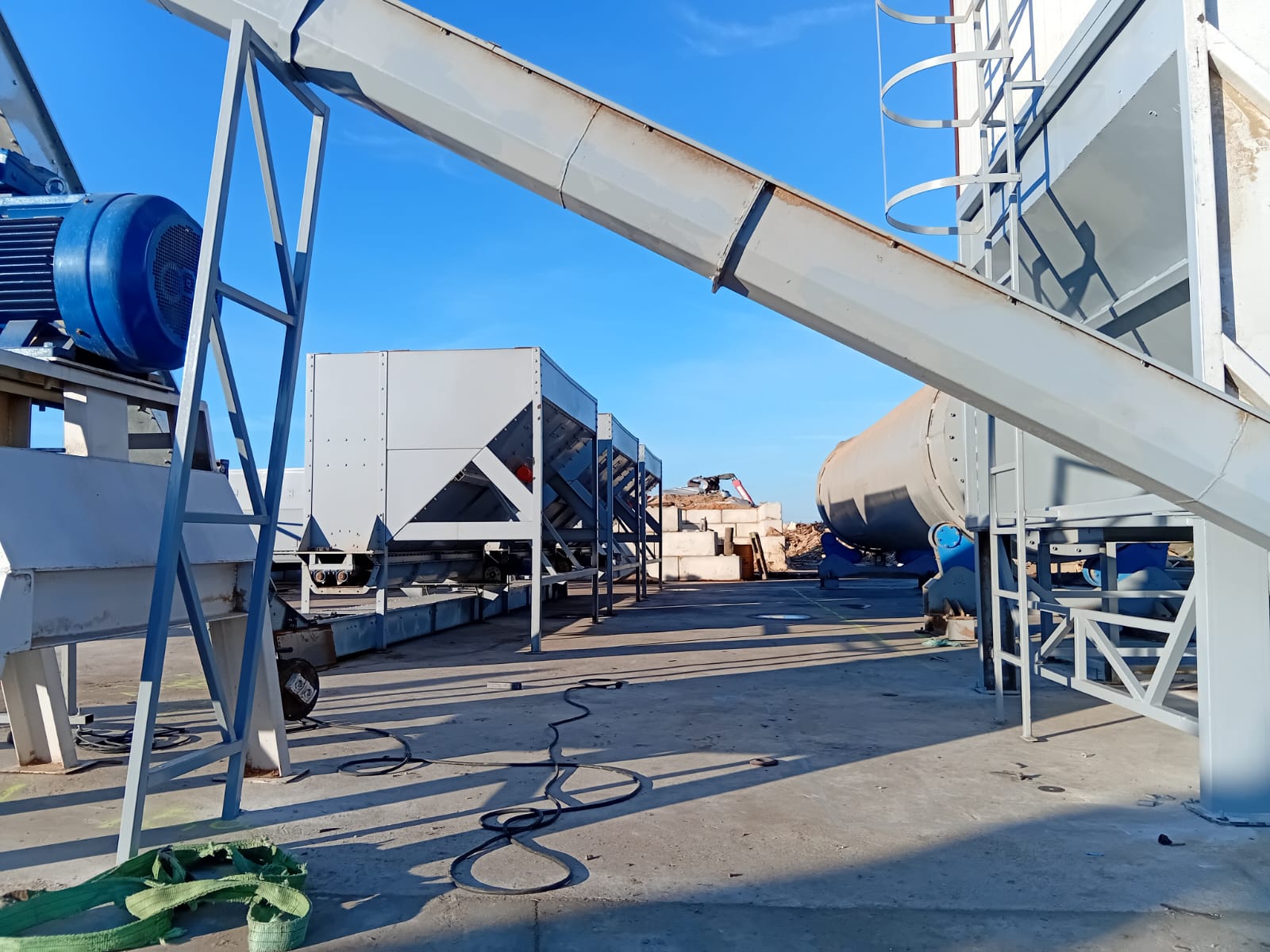
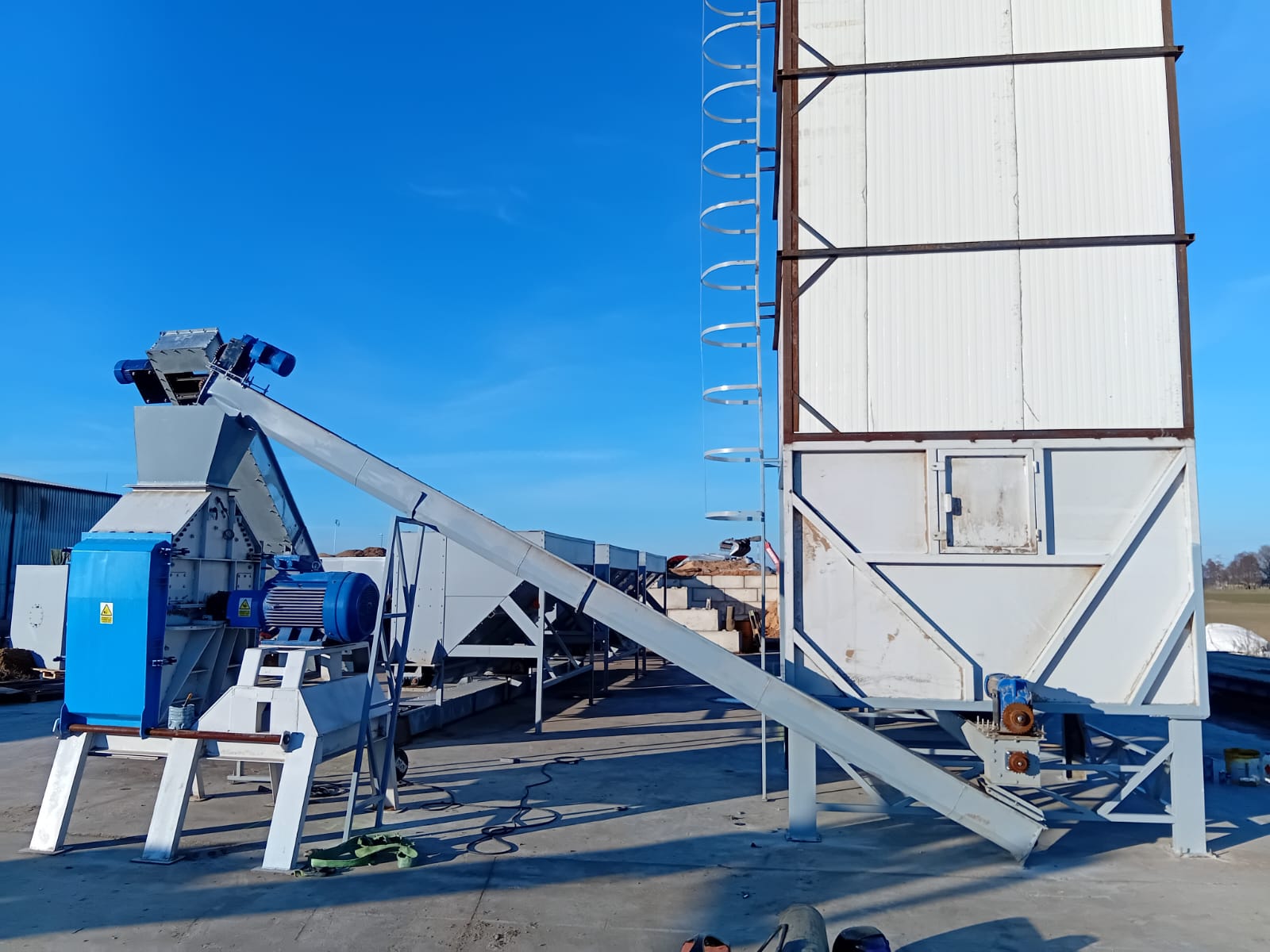
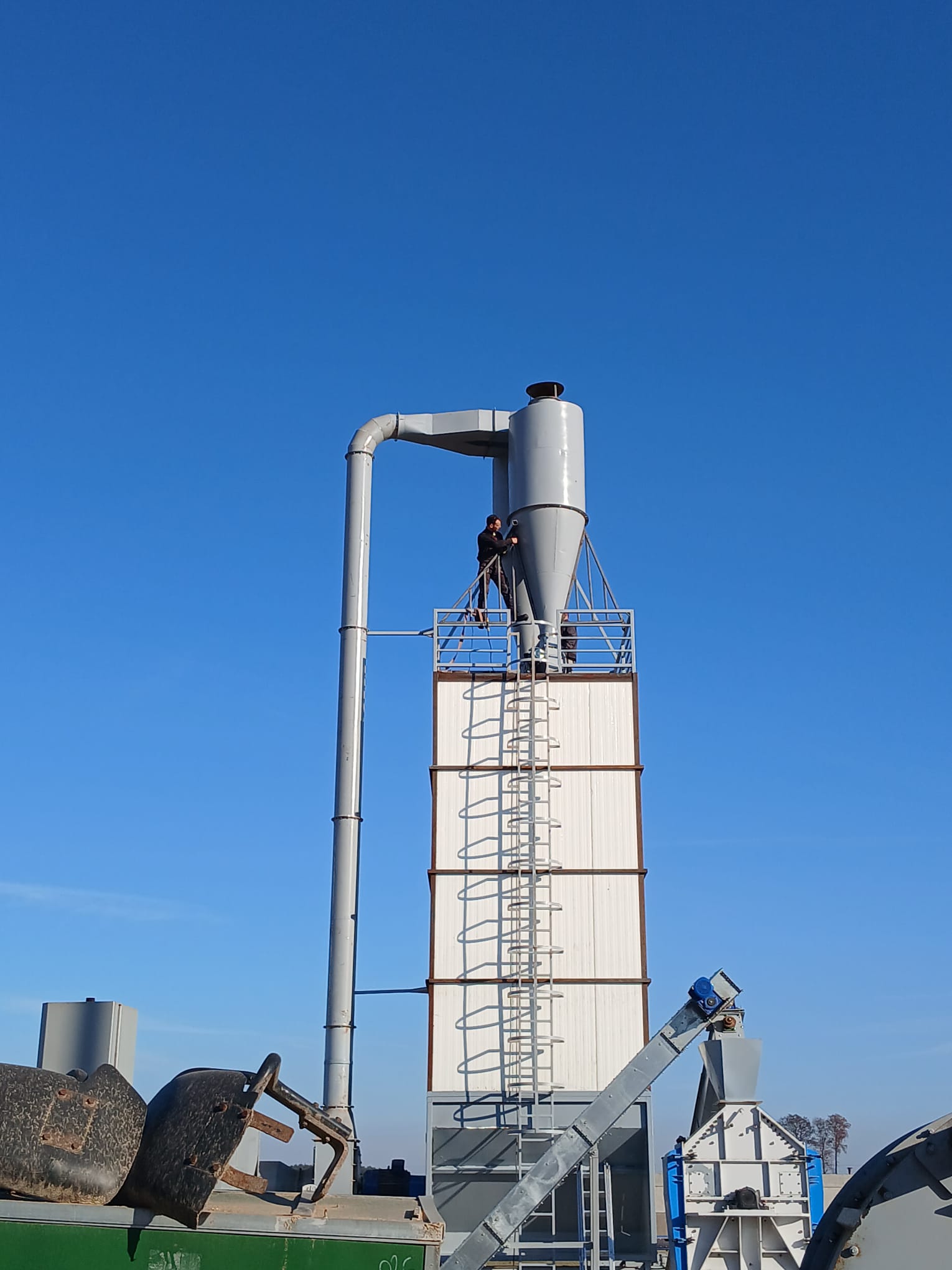
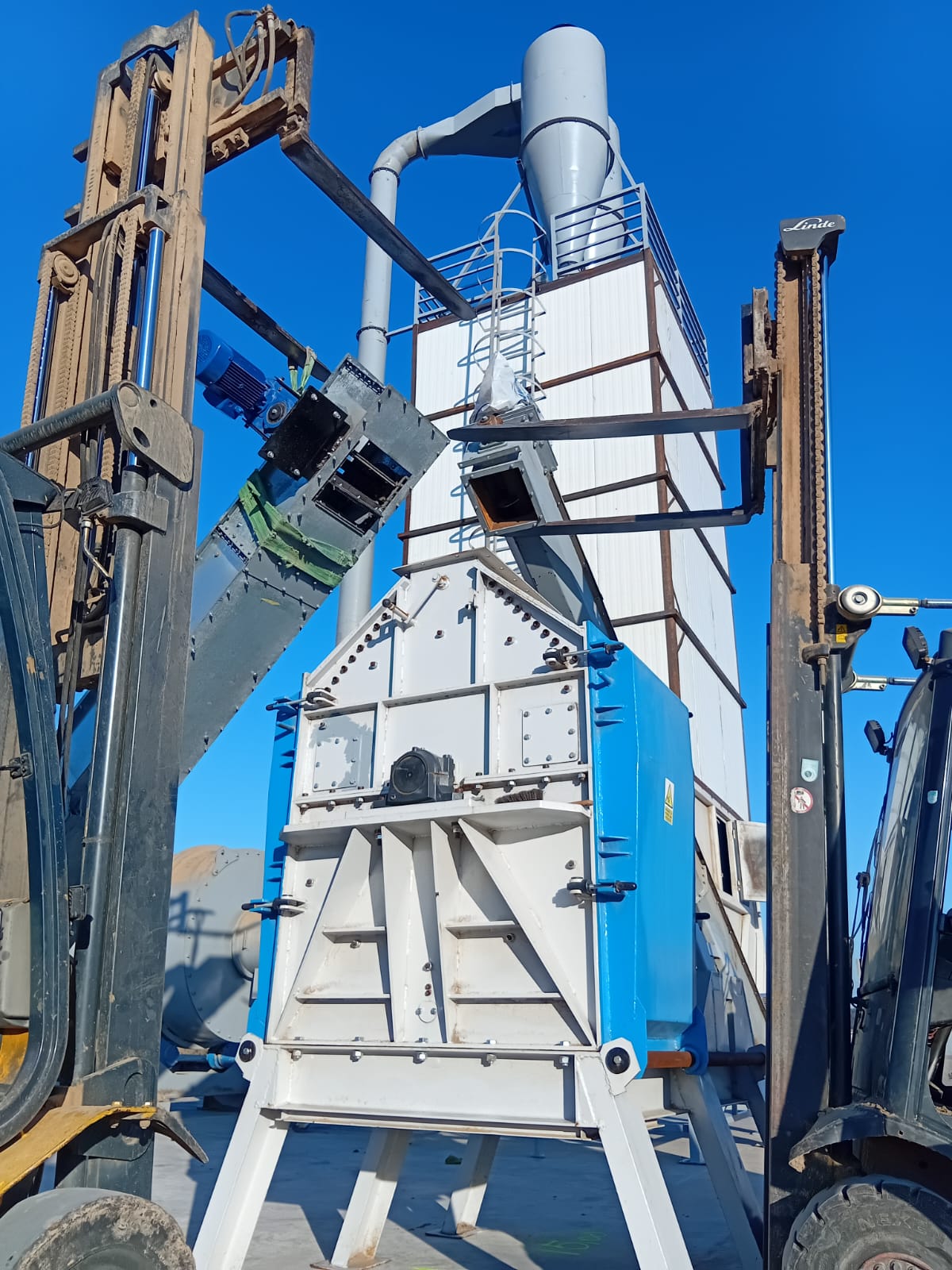
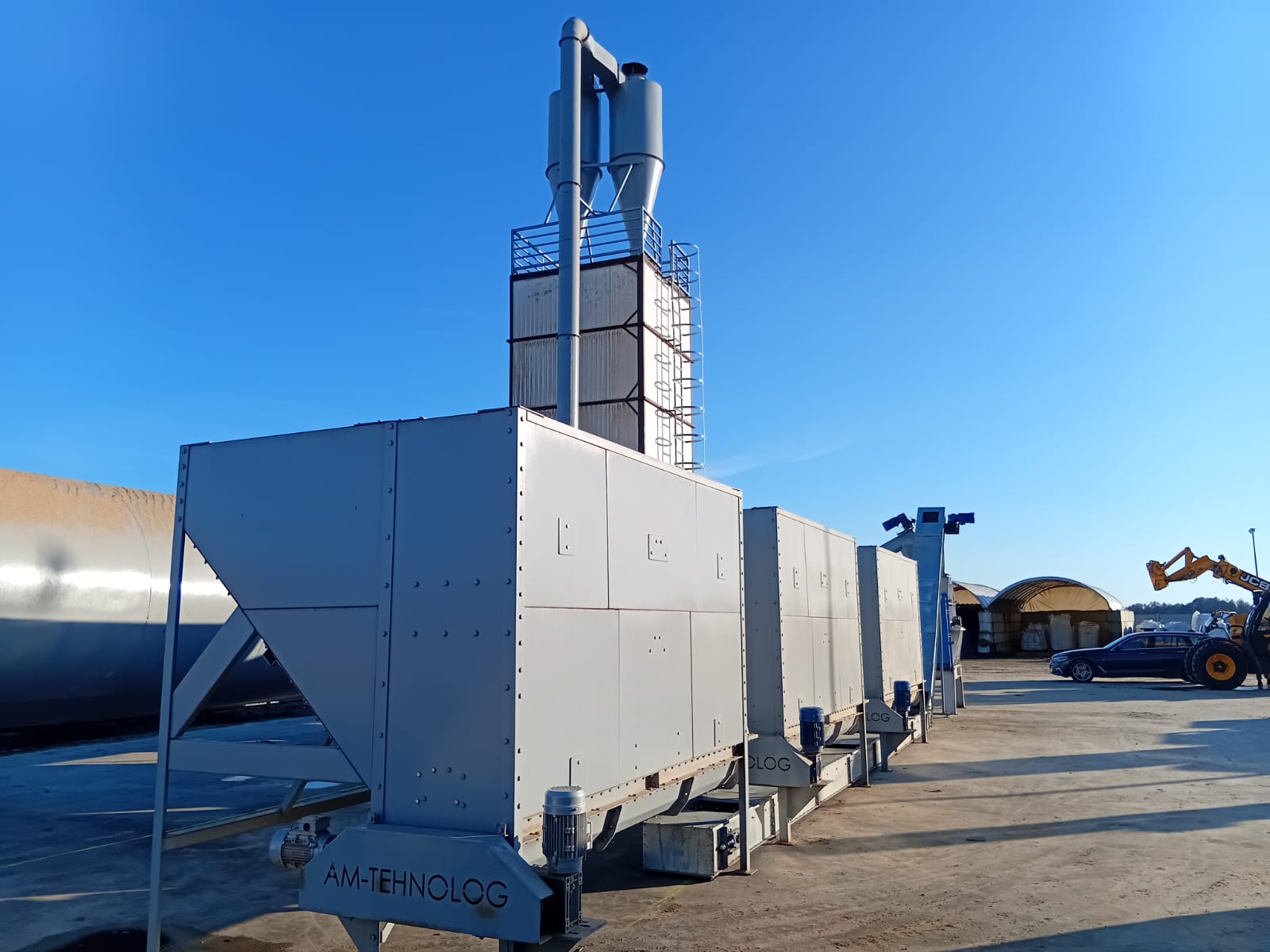
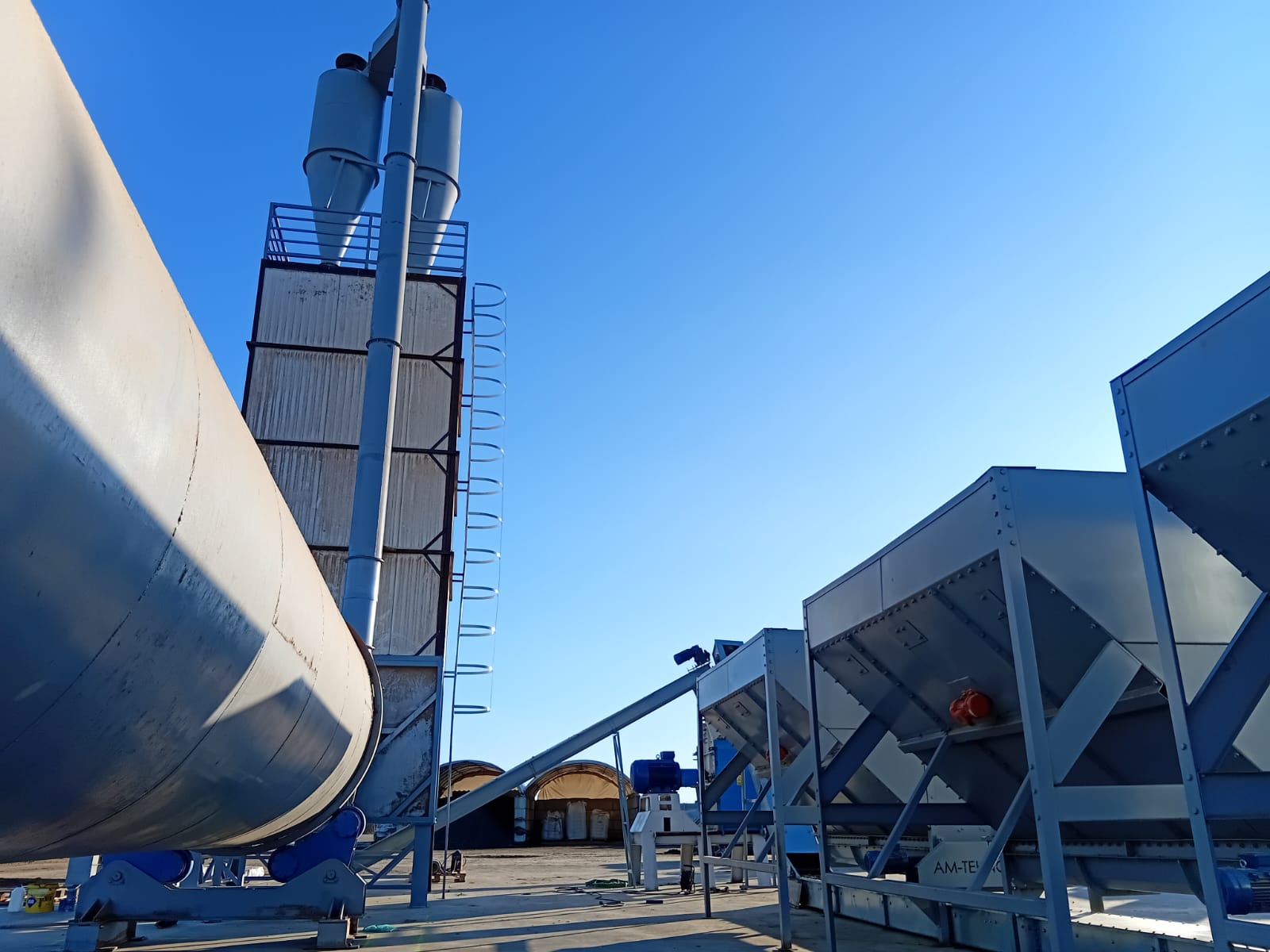
Photos show the actual installation of wood pelleting lines at our customers' facilities.
Wood pellets are a standardised fuel with growing demand in industrial, municipal and private boiler houses.
Replacing fuel oil and coal in industrial installations. Heating cost reduction up to 40% with significant emissions reduction.
Municipal district heating systems are switching to biomass — wood pellets as local fuel reduce dependence on energy imports.
Individual pellet boiler houses and high-quality pellet stoves for heating homes, farms and small businesses.
Combined heat and power generation from biomass — wood pellets as reliable fuel for CHP plants and bio power stations.
High-quality wood pellets are in demand on domestic and export markets — Germany, Italy, Austria, Scandinavia and beyond.
Soft wood pellets (spruce, pine) are used as hygienic and absorbent bedding for horses, cattle and small animals.
Contact us for a technical consultation, detailed quote and implementation plan wood pelleting lines tailored to your capacity and raw material.
Or email: amtehnologodzaci@gmail.com